
PROJECT / Custom Software
Online Payment Collection Platform
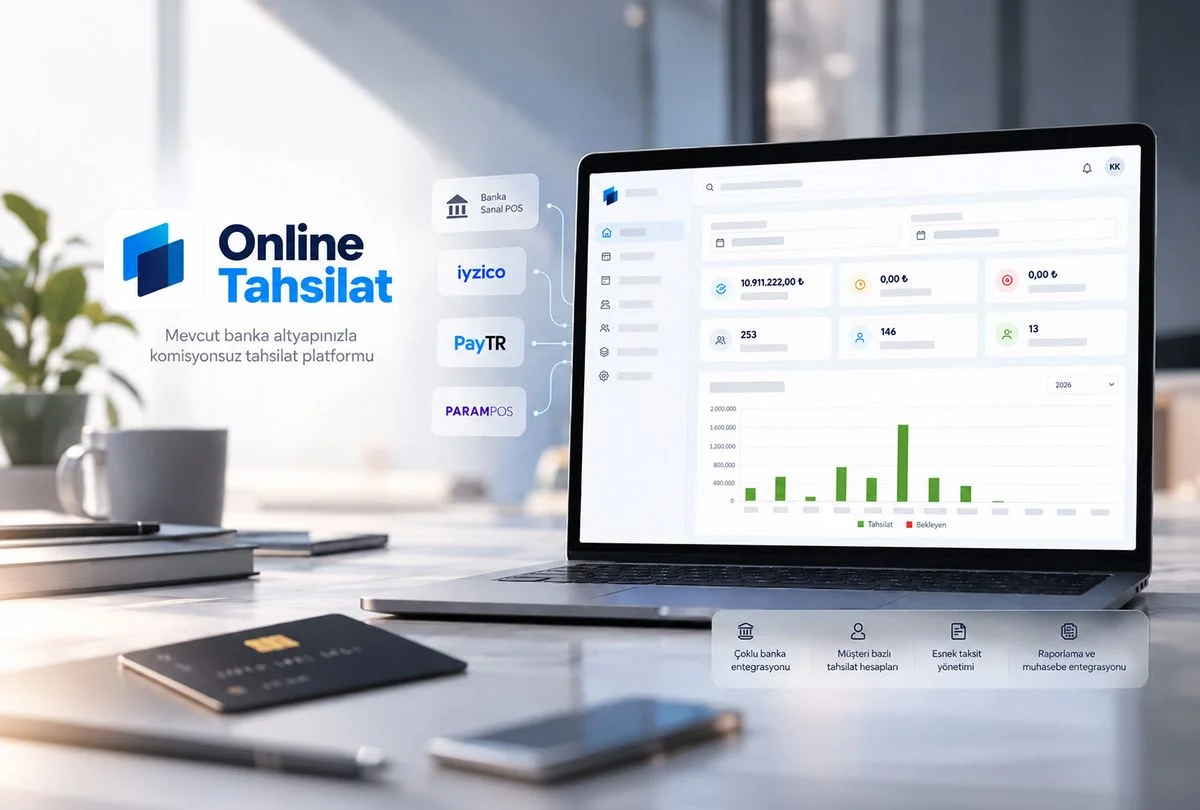
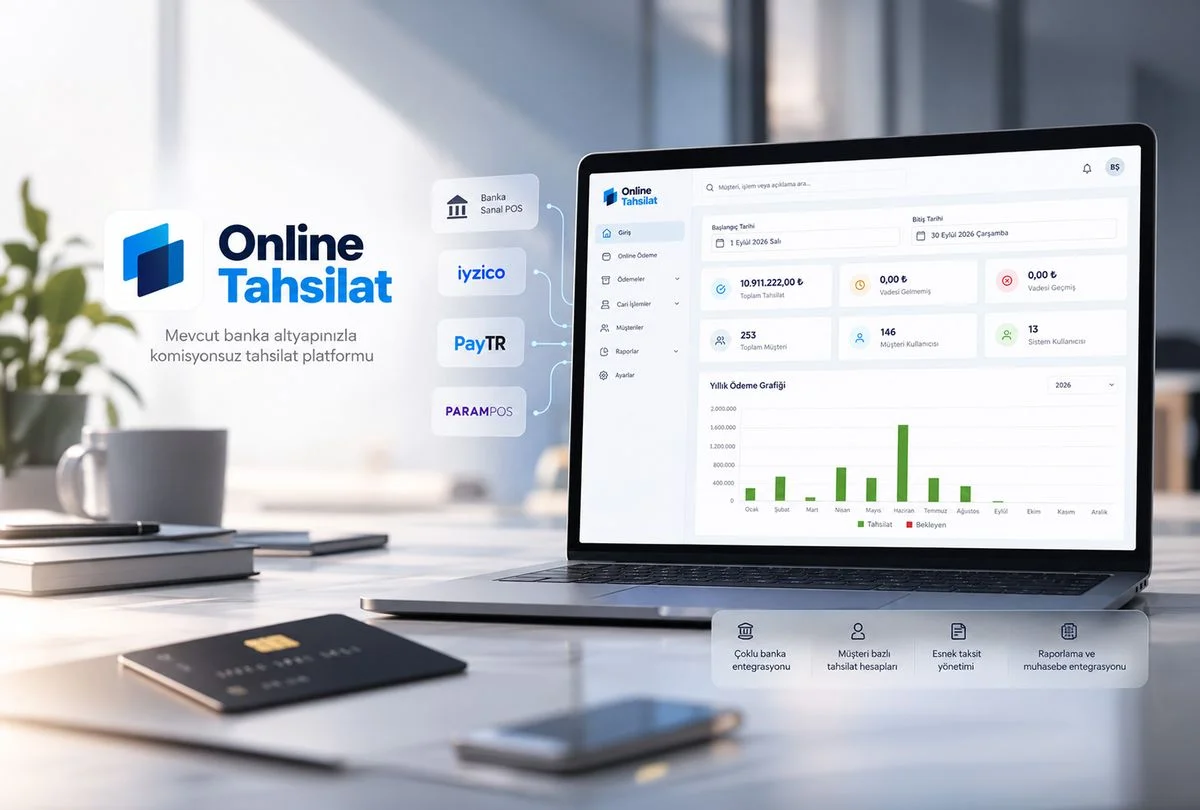
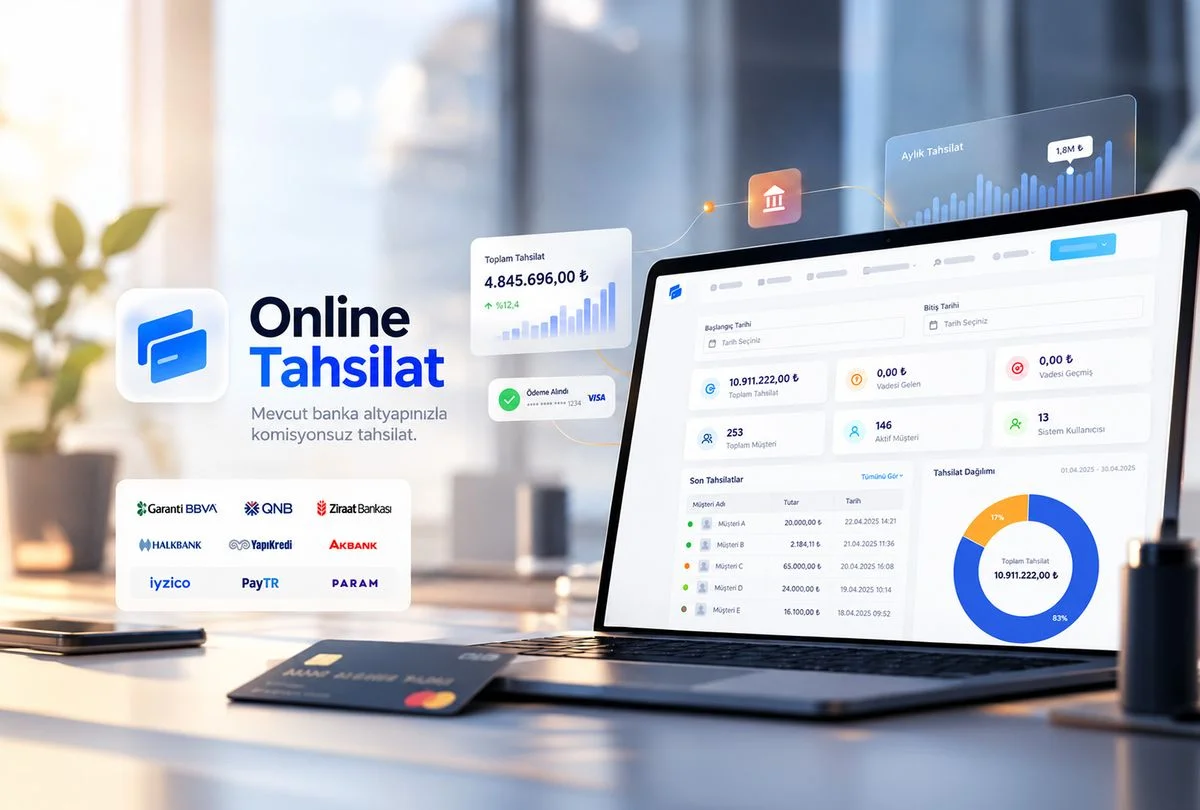
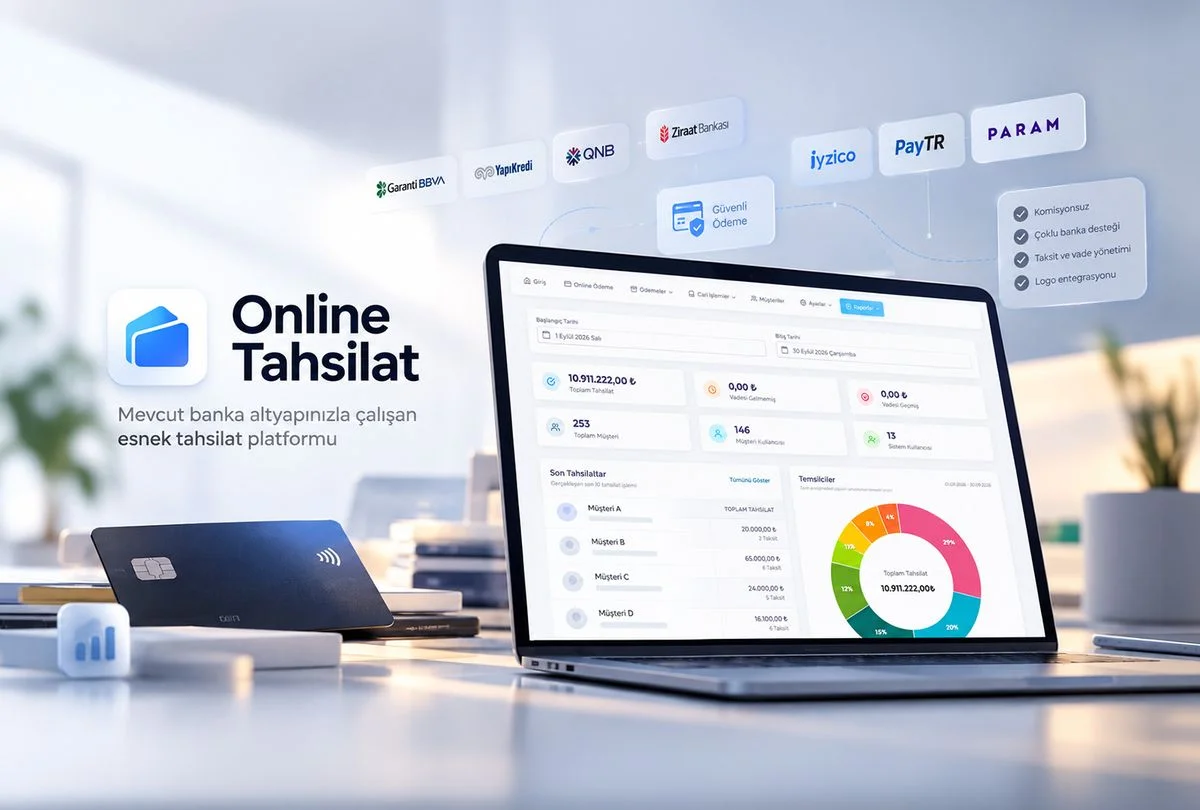
Our platform enables businesses to collect payments online through their own bank and virtual POS agreements. It brings customer accounts, installment options and reporting together, with a usage license and no additional platform commission per transaction.
- Category
- Custom Software
The challenge
Managing online collections without adding a transaction-based platform cost
Many companies work with multiple banks and virtual POS infrastructures. Installment options, financing differences and commercial agreements vary from one company to another, while routing every collection through an intermediary payment model can also introduce additional transaction-based commission costs. For organizations with high collection volumes, these costs can become a meaningful operational expense over time. The need was to let companies preserve their existing bank agreements, collect payments online, monitor transactions from a central panel and do so without adding a separate platform commission to every payment.
The Online Collection Platform addresses this need by placing the company's own financial infrastructure at the center of the solution.
What we built
- 01
Multi-bank and virtual POS integration
Companies can use their existing virtual POS agreements with different banks through the same platform. Shared payment services such as iyzico, PayTR and ParamPOS can also be added when required.
- 02
Customer-specific collection accounts
Companies can create separate user accounts for their customers. Customers can make payments through these accounts and review their own collection history.
- 03
Flexible installment and financing management
Installment options and financing differences are configured according to the company's bank agreements, allowing payment terms to be managed separately for each organization.
- 04
Reporting and accounting integration
Collections can be reported by bank, company user and customer user. An active Logo integration connects payment data with accounting workflows.
The solution
Collections through existing bank agreements
The platform allows companies to connect their existing bank and virtual POS agreements directly to the system. The commercial relationship for the payment remains between the company and the bank. Code64 does not charge an additional commission on the collected amount; the commercial model is based on a platform usage license. This approach makes the platform cost independent from transaction volume and allows companies to continue using their existing banking agreements.
In addition to bank virtual POS services, shared payment infrastructures such as iyzico, PayTR and ParamPOS can also be connected when required. This allows organizations to use their own bank agreements or alternative payment providers within the same collection operation.
Customer-specific collection accounts
Companies can create separate user accounts for their own customers inside the platform. Customers can make payments through their assigned account and review their own collection history. Instead of relying on one-time payment links, this creates an ongoing collection account between the company and its customer.
Installments and financing differences managed by the company
Installment options are configured according to the company's agreements with its banks. The company can define interest-free or interest-bearing installment options according to its own business rules. Payment terms are therefore managed according to the organization's banking agreements and commercial decisions rather than fixed by the platform.
A deliberately focused scope: payment and payment tracking
The platform is intentionally focused on collection and collection tracking. Refunds and cancellations are handled through the relevant bank or payment provider management panels. This separation allows the platform to centralize the collection operation without changing the authorization and transaction boundaries of the banking infrastructure.
Centralized reporting and transaction history
Completed collections can be monitored through a centralized transaction history. Reporting can be evaluated by bank, company user and customer user. This gives finance and accounting teams a broader operational view without requiring them to move between multiple bank panels for day-to-day collection tracking.
Connecting collections with accounting workflows
The platform can work with an active Logo integration. Collection data can be transferred into accounting workflows, connecting online payment activity with back-office operations. The architecture is also designed to support integration with additional accounting applications when needed.
Operational scope
| Area | Scope |
|---|---|
| Virtual POS | Bank virtual POS connections |
| Shared payment providers | iyzico, PayTR and ParamPOS integrations |
| Customer accounts | Separate collection users for company customers |
| Payments | Online card collection |
| Installments | Installment options based on bank agreements |
| Financing differences | Company-configurable interest/term rules |
| Transaction history | Centralized collection tracking |
| Reporting | Reports by bank, company user and customer user |
| Accounting | Active Logo integration |
| Authorization | Role-based user and permission management |
Production usage
The Online Collection Platform is actively used in production. Different customers use the platform according to their own banking and virtual POS structures, while transaction volume varies depending on the organization's scale and collection model.
Digitize collections without replacing your existing financial infrastructure.
We build custom payment and operational systems that connect bank integrations, customer workflows and accounting processes around the way your organization already works. Get in touch
One integration layer across different banking infrastructures
Virtual POS services from different banks can have different technical requirements. Some banks require payment requests to originate from a specific server or fixed IP address. In these scenarios, the platform forwards the required request to the bank service from the server side. This architecture allows different bank integrations to be managed through a common collection flow without exposing their technical differences to the end-user experience.
Handling card data
In some payment flows, technical requirements may cause the request to pass through the application server. The platform is not designed to persist that card data. The collection transaction is executed through the relevant bank or payment provider services. This keeps the platform positioned as the integration and operational layer for collection management rather than as the payment institution itself.
Separate configuration for each company
The platform does not use a shared SaaS tenant model. Each company receives a separate project setup and configuration. Bank integrations, user roles, permissions and collection rules can therefore be defined according to the specific requirements of each organization.
Role-based authorization
User roles and permissions are configurable. Super admin users can define which screens and actions are available to different user groups according to the organization's operational structure.
Measurable impact